
A lost or broken retainer can feel like a mini emergency, but it’s usually very fixable if you act quickly. Teeth shift gradually, not overnight, so a quick call to Dr. Ross and our team is the best way to protect the smile you worked so hard for. Here’s what to do first, how to tell if your teeth have moved and what retainer replacement looks like.
What to Do First If You Lose or Break Your Retainer
Take a breath. One missing or cracked retainer isn’t going to undo your treatment overnight. The most important step is getting in touch with our office soon so we can plan your next move together.
Here’s what to do right away:
- Call our office as soon as you notice the problem.
- Keep any broken pieces. Even small fragments help Dr. Ross see what went wrong.
- Skip the super glue. Household adhesives aren’t safe for your mouth and can ruin the retainer.
- Wear your previous retainer or last aligner tray as a stopgap if you still have it. A slightly tight fit is okay, but stop if it causes sharp discomfort.
- Snap a quick photo of the damage. It can help our team understand the problem when you call.
If a broken wire is poking your cheek or tongue, our page on orthodontic emergencies has quick tips for staying comfortable until your visit.
How Fast Do Teeth Shift Without a Retainer?
Teeth want to move. That’s just biology. The ligaments and bone around your teeth have memory, and without consistent retention, your smile will slowly try to drift back toward its old position. It’s the same reason wearing a retainer after braces matters so much in the first place.
There’s no exact clock on it, but the pattern usually looks like this:
- Right away: Shifting is minimal. This is the best time to call us and get a plan in place.
- As days turn into weeks: Subtle movement can start. Your backup retainer may feel tighter than usual when you put it in, which means it’s still doing its job.
- The longer you wait: Noticeable changes become more likely. A retainer may no longer seat properly, and you could see small gaps, rotations or bite changes.
Several things affect how fast your teeth move:
- How recently you finished active treatment (newer smiles tend to shift faster)
- How complex your original bite was
- Whether you have a bonded retainer backing up a removable one
- How consistently you’ve been wearing your retainer up to this point
Your step-by-step plan:
- Call our office and tell us what happened.
- Wear your most recent backup retainer or final aligner tray if you have one.
- Come in so we can take digital scans of your teeth as they are today.
- Pick up your new retainer and get back on your regular wear schedule.
Why Acting Quickly Matters
Moving fast on a retainer problem is one of the best things you can do for your smile. A quick visit now can save you from a much bigger fix later.
- It helps prevent relapse. Even a few weeks of shifting can be enough to need a short touch-up treatment, and longer gaps can mean more involved care.
- It protects the work you’ve already done. You spent months or years getting your smile where it is. A quick replacement keeps that work locked in.
- It keeps you comfortable. Forcing a cracked or warped retainer can rub your gums, cut your tongue or push teeth the wrong way.
- It keeps your bite stable. Small shifts in alignment can change how your teeth come together when you chew.
Broken vs. Lost vs. Loose Permanent Retainer: What to Do
Not every retainer problem is the same, and the right response depends on what you’re dealing with. Use this quick comparison to figure out your next step.
| Situation | What to Do | Risk Level | Typical Fix |
|---|---|---|---|
| Broken removable retainer | Wear your previous retainer or last aligner tray and call our office | Low to moderate | A new retainer made to fit your teeth |
| Lost removable retainer | Call our office right away | Moderate | A replacement retainer made from new scans |
| Loose or broken bonded retainer | Cover sharp edges with orthodontic wax and don’t pick at the wire | Moderate to high | Rebonding or replacing the wire |
| Retainer that won’t seat | Don’t force it, since this is a sign teeth have shifted | High | A new retainer and possibly a short touch-up treatment |
A few extra notes on each situation:
- Bonded retainer wire poking your tongue? Use orthodontic wax or a small piece of sugar-free gum as a temporary cushion until you can get in.
- Retainer feels tight but goes in? Wear it. That tightness means it’s actively holding your teeth in place.
- Retainer won’t go in at all? Stop trying. Forcing it can crack the plastic or push teeth in the wrong direction.
Replacement Retainer Options
There are three main kinds of retainers, and your orthodontist will recommend the one that fits your teeth and your habits.
- Clear removable retainers are thin plastic trays that look a lot like aligners. They’re nearly invisible and easy to wear at night.
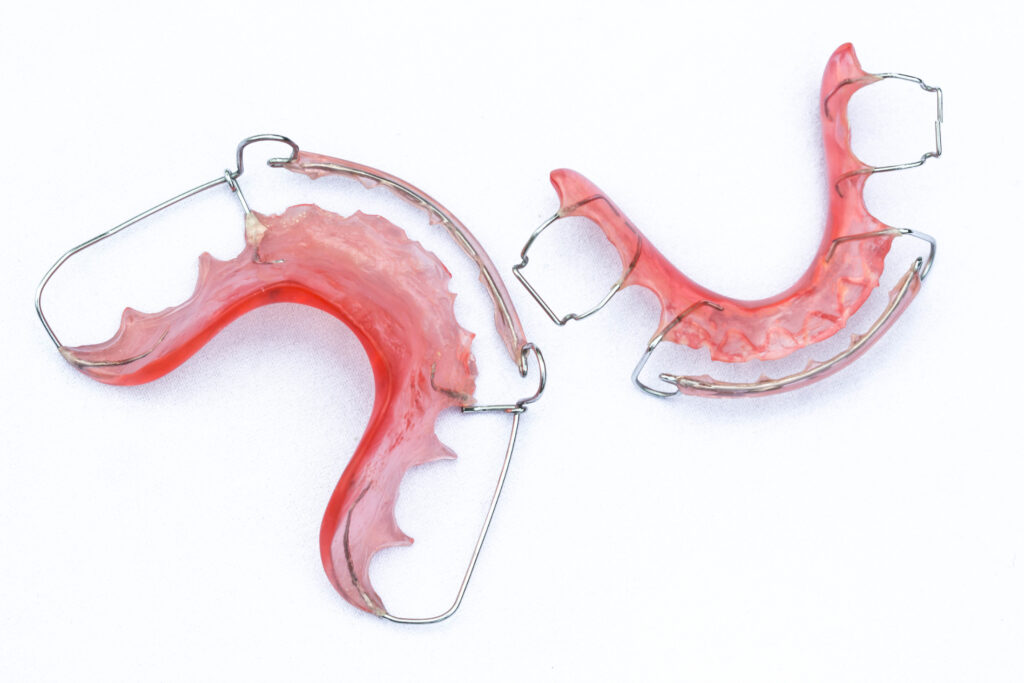
- Wire retainers pair a thin wire with an acrylic piece that rests against the roof of the mouth or behind the lower teeth. They’re durable and can be adjusted.
- Bonded retainers are a thin wire attached to the back of the front teeth. They stay in full time, so there’s nothing to lose, but they need careful cleaning.
If your teeth have moved more than a little, a new retainer alone may not be enough. In that case, a short touch-up treatment with clear aligners may be an option to bring things back into place before you start retention again.
Who Needs a Replacement Retainer Right Away?
Some situations call for a prompt visit, not a “whenever you get around to it” approach. Make a replacement a priority if any of these apply to you:
- You recently finished orthodontic treatment, when the risk of shifting is highest
- Your teeth feel loose or your bite feels different when you chew or close your mouth
- Your retainer is cracked, warped, cloudy or causing gum irritation
- Your bonded retainer wire is poking, detached or has come loose from one or more teeth
- You wear a retainer every night for long-term retention and have no backup
If any of these sound familiar, give our office a call so we can get you back on track.
Keeping Track of Your Next Retainer
A few simple habits make it much less likely you’ll be here again:
- Always put it in its case, never in a napkin or your pocket.
- Keep it away from pets, who love to chew on them.
- Keep it out of hot cars and away from hot water, which can warp the plastic.
For more on keeping it fresh, see our tips on cleaning and caring for a retainer.
Frequently Asked Questions
Can I wear my old retainer if I lost my new one?
Yes, if it still fits. Try it gently. If it slides into place with a snug feel, wear it and call us. If it won’t seat or causes sharp pressure, stop right away, since that means your teeth have moved and you need a new retainer, not a forced one.
Can a broken retainer be repaired?
A cracked plastic retainer usually can’t be fixed for the long term. Once it cracks it loses its shape, and glued seams can trap bacteria or irritate your gums. Wire and bonded retainers can sometimes be repaired, depending on what broke. Dr. Ross will let you know whether a repair or a new retainer makes more sense.
What should I do if my permanent retainer breaks or comes loose?
Call our office to schedule a visit soon. In the meantime, cover any sharp or poking wire with orthodontic wax to protect your tongue and cheek. Don’t pick at the loose area or try to pull the wire off yourself, since that can damage the bonding on other teeth. In many cases the wire can be rebonded or replaced.
What if my retainer doesn’t fit anymore?
Don’t force it. A retainer that won’t seat is a sign your teeth have moved. We’ll take new scans of your teeth as they are today and talk through your options, which may be a new retainer or a short touch-up treatment first.
Do I need a new retainer after Invisalign?
Yes. Just like braces, Invisalign needs a retainer afterward to hold your teeth in their new positions. Your final aligner works as a short-term backup, but it isn’t meant to be your long-term retainer.
A lost or broken retainer doesn’t have to derail your smile. With a quick response and the right plan, you can protect the work you’ve already put in. If you’re a patient at Orthodontics of South Miami, call our office to schedule your replacement visit with Dr. Ross. If you’re not a patient yet, a free consultation is an easy way to get started.